Stories that center on destiny often celebrate power, purpose, and transformation. Yet the idea of being “chosen” carries a burden that is rarely simple. It is not only about ability or fate. It is about responsibility, sacrifice, and the constant tension between personal desire and moral duty. In historical fiction, this weight becomes even more intense when the world itself is hostile, unforgiving, and driven by fear.
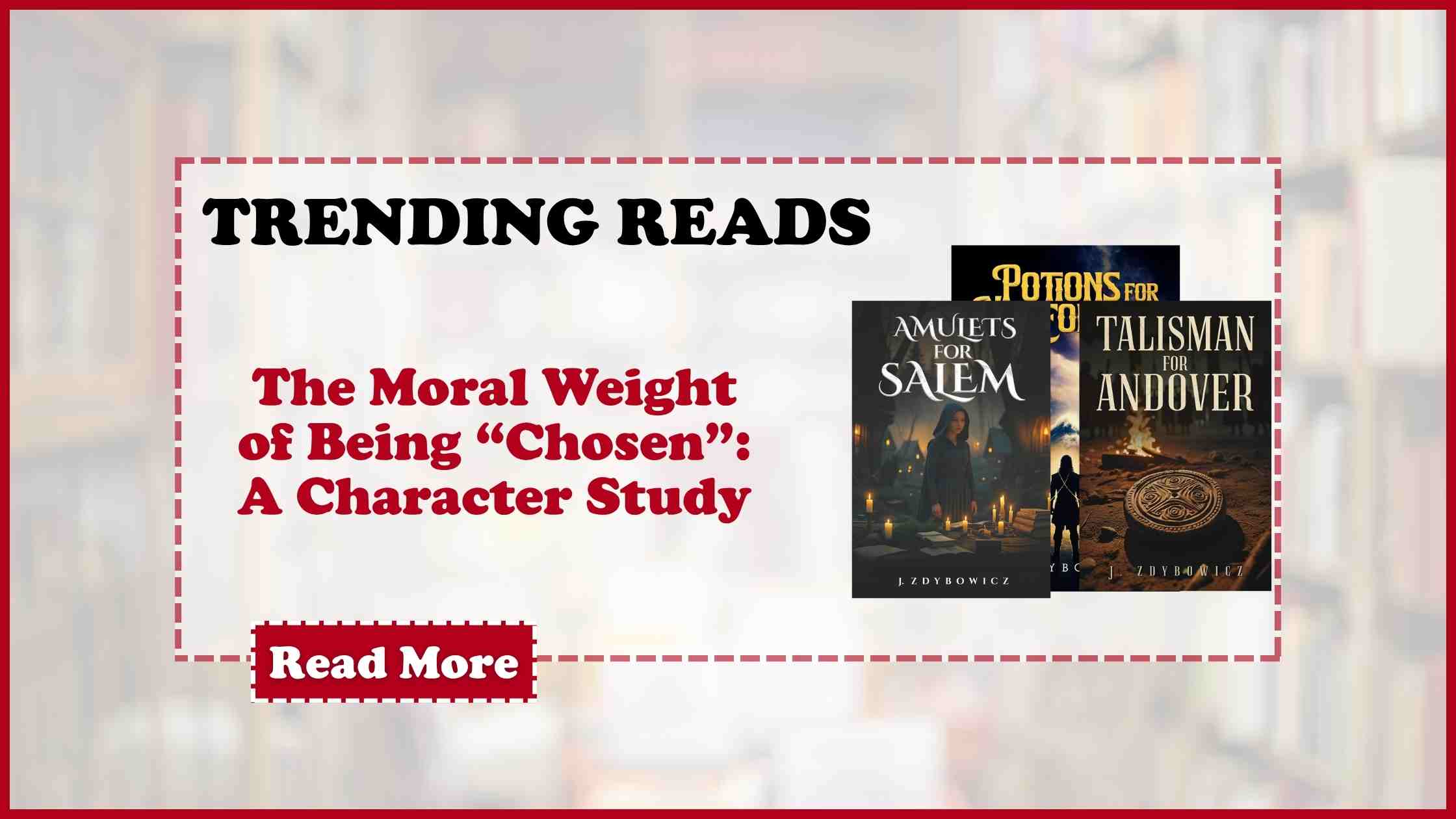
In J. Zdybowicz’s Amulets for Salem, Talisman for Andover, and Potions for Norfolk, the concept of being chosen is not presented as a gift to be embraced without question. Through Apollina’s journey, it becomes a deeply human struggle. She does not step into her role with certainty or pride. She questions it. She resists it. She feels the cost of it in every decision she makes.
Apollina’s path begins with survival. She is raised in secrecy, taught that knowledge must be hidden and that safety depends on silence. At this stage, there is no sense of destiny, only the instinct to endure. However, as the world around her begins to repeat the same cycles of fear and accusation, her role shifts. She is no longer simply protecting herself and her family. She is faced with the possibility of stepping in to protect others.
Being chosen means seeing what others cannot ignore. It means recognizing injustice and deciding whether to act, knowing that action carries risk. Apollina’s struggle is not about whether she has the ability to help. It is about whether she should. Each choice forces her to weigh consequences that extend beyond herself. Saving one life could endanger many. Remaining hidden could allow innocent people to suffer.
The burden is not only external. It is deeply internal. Apollina grapples with doubt, questioning whether she has the right to decide who is worth saving and when intervention is justified. This uncertainty adds depth to her character, making her decisions feel grounded rather than idealized. She is not driven by a desire to be a hero. She is driven by a growing understanding that inaction carries its own form of responsibility.
As the series progresses, the idea of being chosen expands beyond a single individual. It becomes shared among those who stand beside her. This shift is significant. It transforms the burden from something isolating into something collective. The responsibility is still heavy, but it is no longer carried alone. This dynamic highlights an important truth. Purpose does not always belong to one person. It can exist within a group, strengthened by trust and shared conviction.
What makes this portrayal compelling is its realism. Destiny is not glorified. It is examined. The emotional cost is visible. The fear of failure is present. The weight of every decision lingers. This creates a narrative that feels authentic, where strength is not measured by certainty but by the willingness to continue despite uncertainty.
For readers, this character study offers more than a journey through historical events. It invites reflection on the nature of responsibility itself. What does it mean to be chosen in a world that resists change? And what is the true cost of answering that call?
In this series, the answer is clear. Being chosen is not about power. It is about the courage to act when silence would be easier.
Books available on Amazon :
Amulets for Salem : https://www.amazon.com/dp/1969868244
Talisman for Andover : https://www.amazon.com/dp/B0GF4738J6/
Potions for Norfolk : https://www.amazon.com/dp/B0GQ5BQ24W