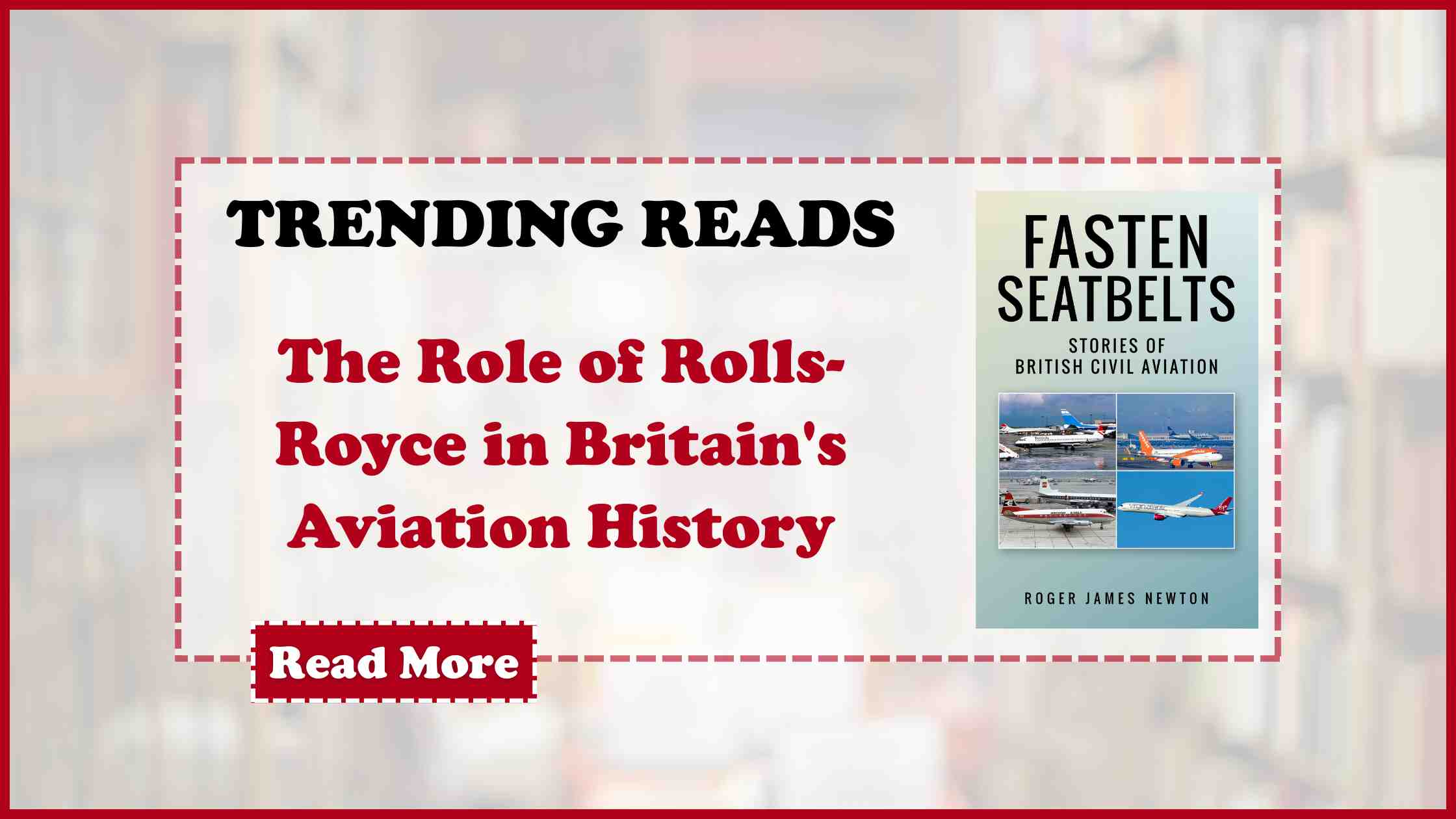
When you hear the name Rolls-Royce, you likely picture luxury cars gliding down a pristine road. But far above that road, in the clouds and stratosphere, is where Rolls-Royce carved out its greatest legacy. In Roger James Newton’s Fasten seatbelts – Stories of British Civil Aviation, the true engine of Britain’s aerial ascent is revealed: the unwavering innovation and the periodic dominance of Rolls-Royce in the global aviation landscape.
From the early 20th century to the cutting edge of modern aerospace engineering, Rolls-Royce has powered Britain’s civil aviation story. More than just an engine manufacturer, it became a symbol of reliability, ambition, and national pride.
The story begins with a meeting in 1904 between Charles Rolls and Henry Royce. It was an unlikely duo from starkly different backgrounds who shared a singular goal: to create the best-engineered car in the world. But by 1914, with the onset of World War I, Rolls-Royce had shifted gears, producing its first aero-engine: the Eagle. This move laid the foundation for an aviation legacy.
The Eagle went on to power the Vickers Vimy, the aircraft that completed the first nonstop transatlantic flight in 1919. That same year, Britain also saw its first international passenger flight, a moment Newton details with reverence.
Rolls-Royce played a pivotal role in transitioning from piston to jet engines. In 1942, it secured rights to Frank Whittle’s revolutionary gas turbine design from Rover. The company’s leadership in jet propulsion was born.
As Newton chronicles, the post-war Brabazon Committee helped refocus Britain’s aircraft ambitions with specifications for new civil aircraft types. Rolls-Royce responded with engines that powered many of these bold new aircraft, including the ill-fated but groundbreaking de Havilland Comet and the much more successful Vickers Viscount.
Another Rolls-Royce iconic civil aviation contribution was, n partnership with French company Snecma, the development of the Olympus 593 engines that powered the Concorde to twice the speed of sound. Concorde represented ambition unbound, and Rolls-Royce delivered.
Despite commercial challenges, the technical achievement of powering the world’s fastest passenger aircraft solidified Rolls-Royce’s reputation as a world leader in engineering excellence.
Not every moment was smooth. In the early 1970s, Rolls-Royce faced bankruptcy due to development challenges with the RB211 engine. These were very black times both for the company and for the British Nation but, with Government support and restructuring, the company bounced back, transforming itself into a powerhouse of modern jet engine design.
Today, the descendants of the RB211 – like the Trent series – power wide-body aircraft like the Boeing 787 and the Airbus A330 and the massive XWB engines power the Airbus A350. They stand as testaments to Rolls-Royce’s resilience and capacity for reinvention.
Newton reminds readers that while passengers may not always notice the engines under the wing, every safe landing owes something to engineering mastery. Rolls-Royce’s commitment to reliability and continuous improvement has made it a staple of both civil and military aviation worldwide.
In Fasten seatbelts, Roger Newton expertly weaves Rolls-Royce’s influence into the broader tapestry of British civil aviation. He also includes stories from his time working as a legal adviser in the company’s Commercial Department during the 1970s. The company’s engines didn’t just power aircraft; they powered dreams, industry, and a nation’s global influence. For 21st-century flyers, the quiet hum of a Rolls-Royce engine overhead is more than just noise. It’s the sound of history, progress, and Britain’s enduring supremacy in the skies.