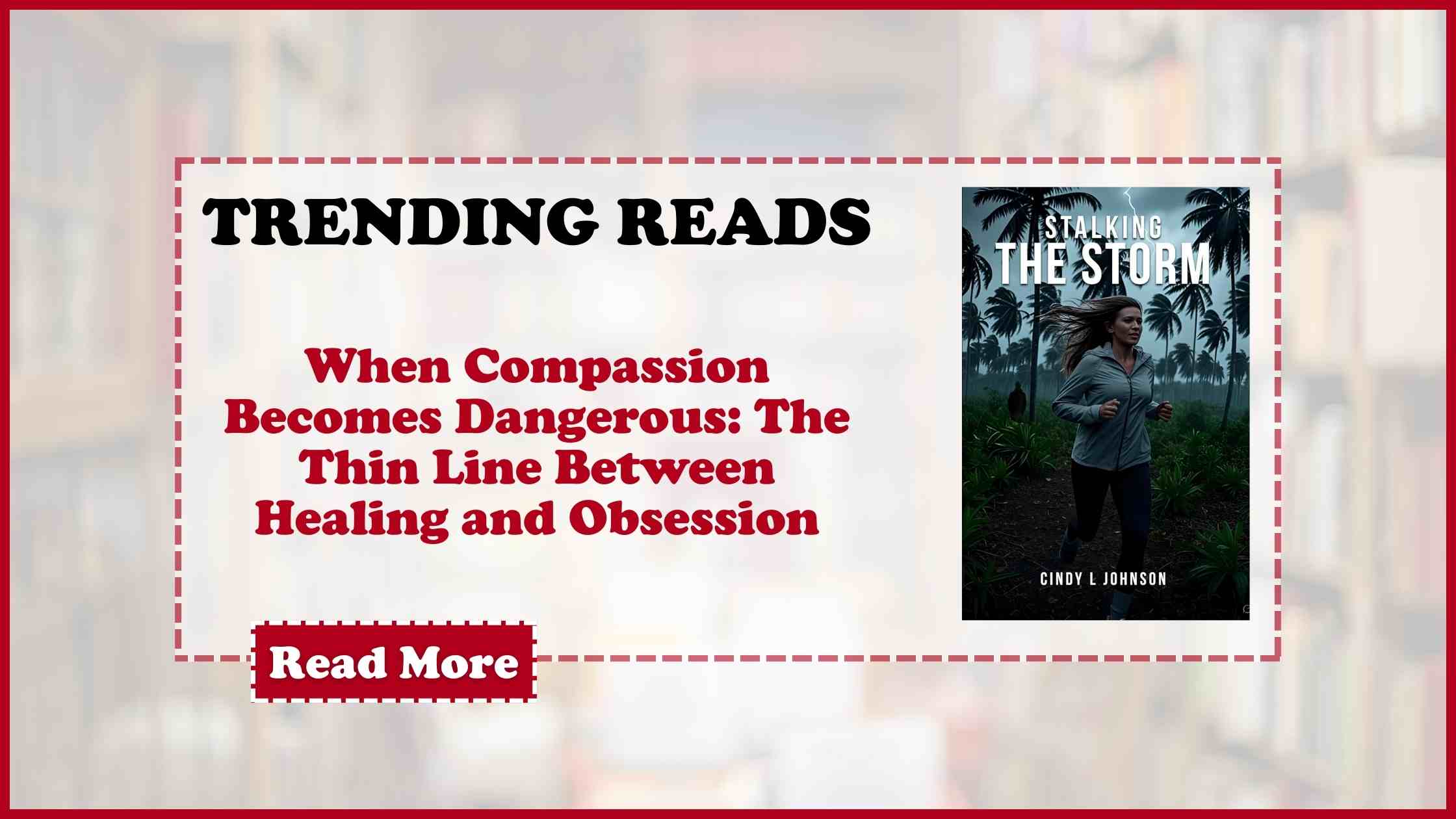
In Stalking the Storm by Cindy L. Johnson compassion is not simply a virtue. It is a catalyst. The novel asks an unsettling question that lingers long after the final page: what happens when professional care is misinterpreted as personal devotion?
Camille García is a nurse trained to operate in crisis. She works in addiction medicine, where patients arrive fragile, ashamed, and often desperate for someone to see them as more than their worst mistake. In that environment, compassion is not optional. It is clinical. It stabilizes heart rates, calms tremors, and keeps panic from escalating into physical harm. A steady voice and a steady hand can mean the difference between life and death.
But compassion, when received by someone whose emotional framework is fractured, can become distorted.
Brett Reed enters Camille’s life as a patient in withdrawal. He is physically dependent, psychologically unstable, and emotionally starved. In a detox setting, boundaries are clear to the professional. The nurse monitors vitals, administers medication, assesses risk, and provides reassurance. The interaction is structured, intentional, and time limited. For the caregiver, the connection is therapeutic. For the patient, it can feel transformative.
The danger begins when the patient confuses stabilization with salvation.
In addiction recovery, the individual often experiences an acute sense of exposure. Shame, fear, and vulnerability surface all at once. When a nurse remains present during a seizure or talks a patient through panic, that presence can register as profound intimacy. The caregiver becomes the only steady figure in a chaotic internal landscape. The brain, already rewired by trauma and substance dependence, may attach to that steadiness with disproportionate intensity.
What is clinical to one person may feel deeply personal to another.
This imbalance creates fertile ground for obsession. The patient may interpret kindness as destiny. Routine encouragement may be reframed as emotional exclusivity. Professional attention can be romanticized into a narrative of rescue and partnership. The caregiver, meanwhile, continues operating within policy and protocol, unaware that the interaction has taken on mythic significance in the other person’s mind.
Johnson’s novel exposes how quickly that distortion can escalate. Brett does not simply appreciate Camille. He constructs meaning around her. Her voice becomes a symbol of safety. Her presence becomes proof of worth. When discharge arrives, it does not feel to him like the end of treatment. It feels like abandonment.
That emotional pivot is where compassion turns dangerous.
Caregiving professions rely on empathy, yet they also require strict boundaries. In real clinical settings, nurses are trained to avoid dual relationships, limit personal disclosure, and document interactions carefully. These safeguards exist because the power dynamic is inherently unequal. One person is vulnerable and in crisis. The other holds knowledge, authority, and access to relief.
When that dynamic is misunderstood, the caregiver may become the focus of fixation.
The novel also underscores a broader cultural misconception. Society romanticizes the idea of being “saved” by love. In reality, recovery from trauma or addiction demands internal work. No external figure, however compassionate, can substitute for that process. When someone externalizes their healing onto another person, obsession can masquerade as devotion.
The tragedy in Stalking the Storm is not that Camille shows compassion. It is that Brett lacks the psychological stability to process it appropriately. His history of abuse and addiction leaves him primed to cling to any source of warmth. Instead of integrating the support into his own growth, he anchors it to the individual who provided it.
Compassion remains powerful. It remains necessary. But the novel reminds readers that empathy without boundaries can become combustible when filtered through trauma.
Healing requires presence. Obsession requires possession. The difference lies not in the kindness offered, but in how it is received and interpreted.
Available On Amazon: https://www.amazon.com/dp/B0FWHXLXYV