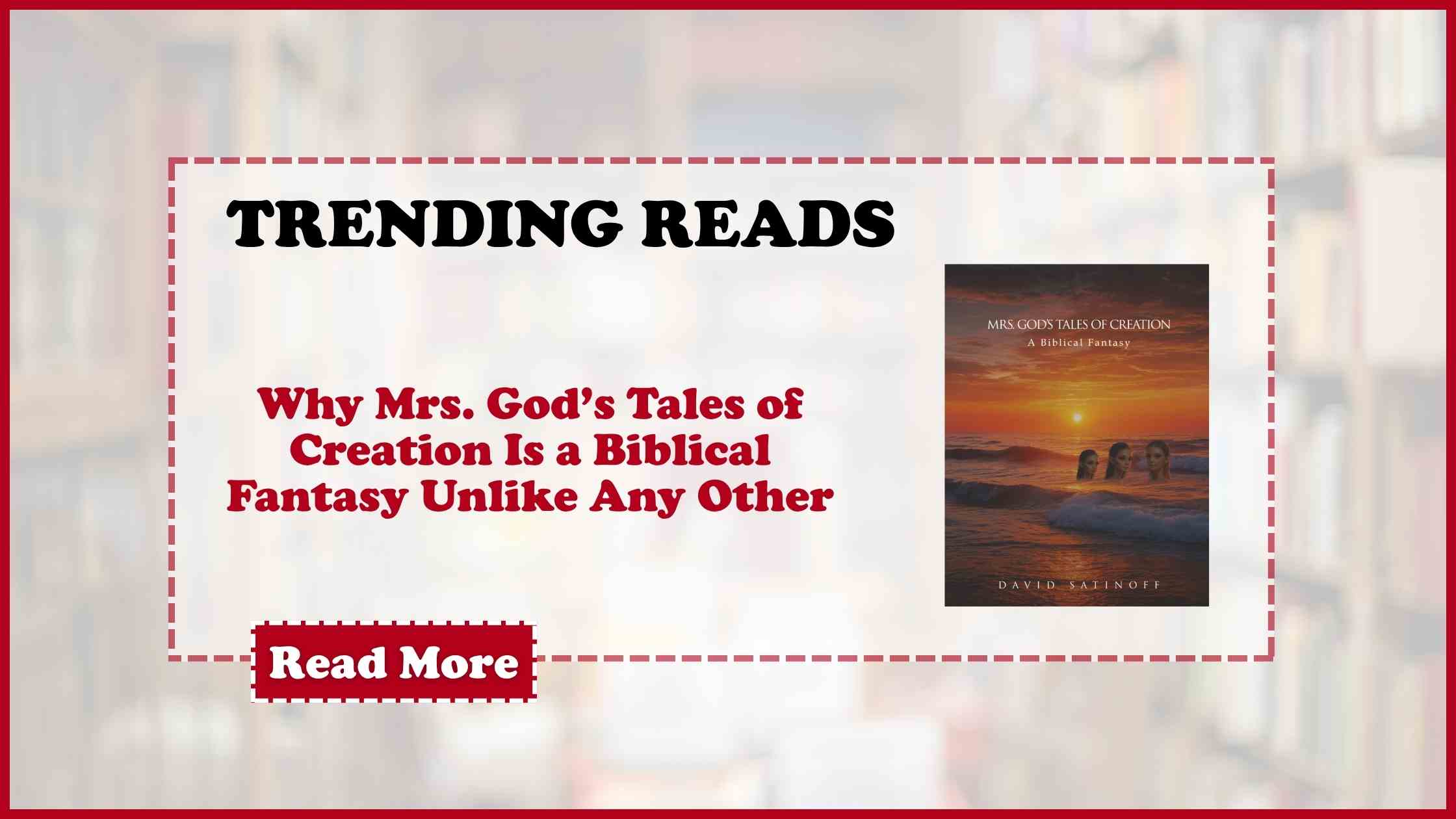
Biblical fantasy is no stranger to bold ideas. Writers have reimagined angels, demons, creation stories, ancient prophecies and the mysteries of heaven for generations.
But the author’s Mrs. God’s Tales of Creation: A Biblical Fantasy begins with a question that feels instantly different:
What if God had a wife?
And what if that wife was a former nonbeliever who was perfectly willing to challenge Him?
That imaginative premise gives Satinoff’s novel its unusual identity. The story is narrated by Rachel, Mrs. God herself, who introduces readers to a version of Creation shaped not only by divine power, but also by curiosity, doubt, humor, romance and disagreement. Rachel is presented as both narrator and guide, someone who once considered herself a “devout atheist” before eventually developing an extraordinary relationship with God.
A God Who Feels Surprisingly Human
One of the book’s most distinctive choices is its portrayal of God.
Rather than presenting Him solely as distant, flawless and all-knowing, Satinoff imagines a Creator who can be sensitive, uncertain, lonely, burdened and even confused about the limits of His own abilities.
Rachel describes Him as kindhearted but imperfect, someone capable of wisdom and mistakes alike. She also questions familiar assumptions about whether God truly knows everything or can control every event in every human life.
That makes the book less about delivering theological answers and more about exploring provocative possibilities.
What if omnipotence has limits?
What if God experiences self-doubt?
What if the Creator sometimes wonders about the same mysteries humans do?
These questions give the fantasy a philosophical dimension without removing its playful tone.
Meet “The Godd Couple”
The relationship between Rachel and God is where the novel becomes especially unconventional.
Their conversations often resemble those of a married couple if that married couple happened to be debating Creation, immortality, prayer, human behavior, God’s responsibilities and the fate of civilization.
Satinoff even presents some of these exchanges as conversational mini-plays called “The Godd Couple.” The manuscript describes their discussions as an important part of the book’s blend of wit, philosophy, psychology and romance.
Rachel may be affectionate toward her husband, but she is hardly submissive. When she believes God is failing to respond adequately to the chaos of the world, she decides that she must confront Him about it.
That dynamic turns cosmic questions into personal ones.
A Story Designed for Curious Readers
Mrs. God’s Tales of Creation does not fit neatly into a single category. It combines biblical fantasy with satire, philosophical speculation, relationship humor, skepticism, science and reflections on human nature.
It is also intentionally open to different kinds of readers. The book presents itself as a story for believers, atheists, agnostics, free thinkers and anyone curious enough to entertain unconventional questions about God and existence.
That openness may be its greatest strength.
Satinoff is not simply retelling Creation. He is turning it into a conversation.
And in this conversation, God is not standing alone at the center of the universe.
Mrs. God is standing beside Him, asking questions.