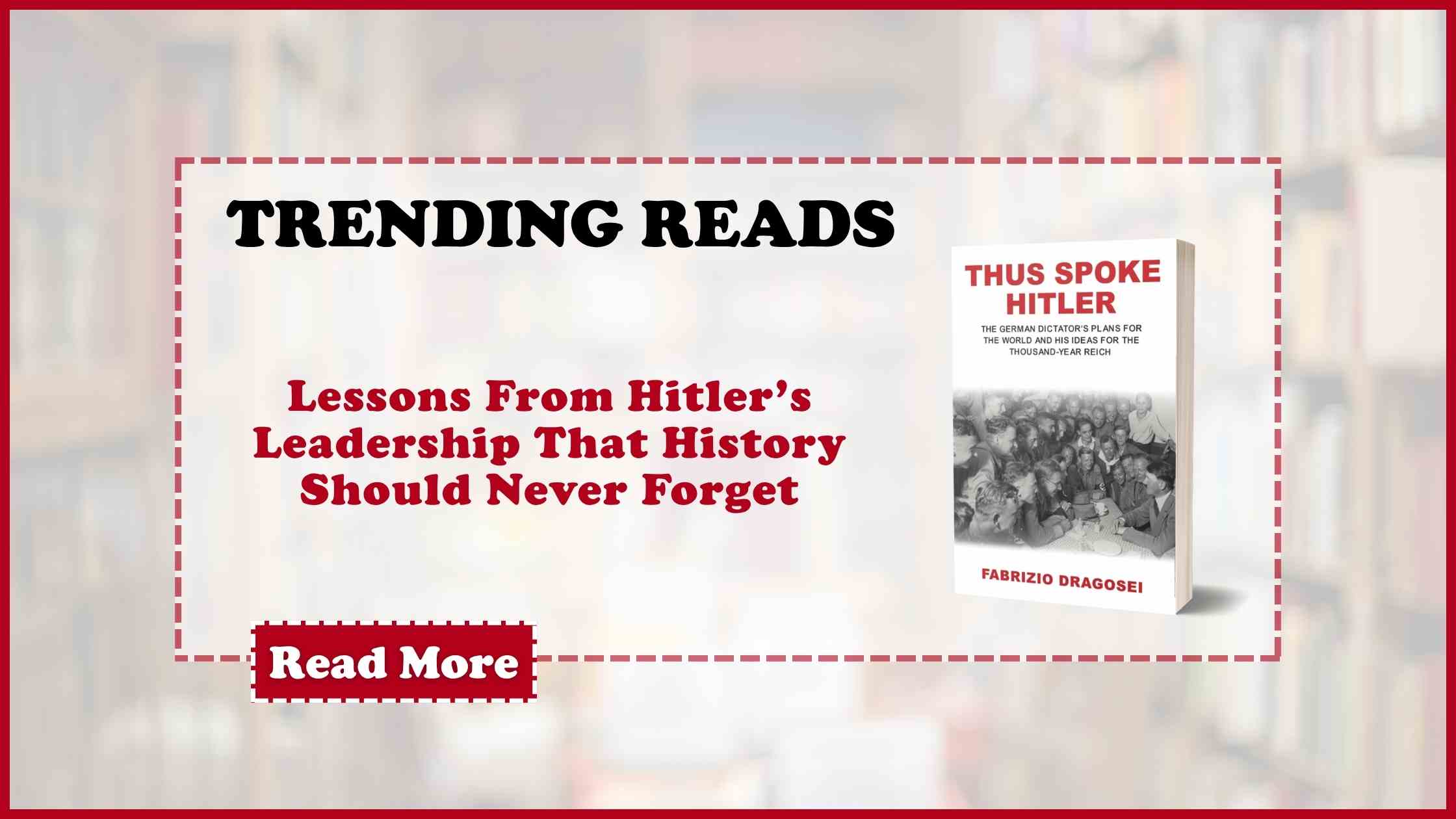
History is filled with leaders who shaped nations for better or worse. Adolf Hitler belongs to the latter category, a dictator whose leadership led to unprecedented destruction, human suffering and global conflict. Understanding how such a figure rose to power is not about admiration; it is about learning from history to prevent its darkest chapters from repeating. Thus spoke Hitler by Fabrizio Dragosei offers readers a compelling opportunity to examine those lessons through documented historical evidence.
Unlike many books that simply recount the events of World War II, Thus spoke Hitler explores the ideology, rhetoric and decision-making that fueled Nazi Germany by examining Hitler’s own speeches, conversations, military conferences and writings. Rather than presenting isolated quotations, Dragosei carefully places these statements within their historical context, helping readers understand how words, policies and actions became intertwined.
One of history’s most important lessons is the extraordinary influence of political language. Hitler’s speeches were carefully crafted to appeal to emotion, manipulate public opinion and create a sense of national purpose. Through persuasive rhetoric and relentless propaganda, he transformed political ideas into mass movements. Thus spoke Hitler demonstrates how language became one of the regime’s most powerful tools, reminding readers why critical thinking and informed citizenship remain essential in every generation.
Another lesson is the danger of unchecked power. The book illustrates how authoritarian leadership thrives when institutions weaken, dissent is silenced and unquestioning loyalty replaces accountability. By following Hitler’s own words alongside the historical events they accompanied, readers gain insight into how centralized power can erode democratic values and lead to catastrophic consequences.
Fabrizio Dragosei’s meticulous research also reveals the importance of studying history through primary sources. Instead of relying solely on later interpretations, the book draws extensively from authentic documents and archival materials, allowing readers to examine historical evidence directly. This approach provides a deeper understanding of the motivations, decisions and strategies that shaped one of the most devastating periods in modern history.
The book also encourages readers to recognize the consequences of ideology driven by intolerance and extremism. Hitler’s leadership was built on exclusion, aggression and the systematic dehumanization of others. Understanding how those ideas were communicated and accepted is vital for recognizing similar warning signs in any society. By examining historical documents with care and context, readers can better appreciate the importance of protecting democratic institutions, human rights and the rule of law.
What makes Thus spoke Hitler particularly valuable is Dragosei’s balanced and scholarly approach. He neither sensationalizes nor simplifies history. Instead, he guides readers through complex events with clarity, presenting documented evidence while encouraging thoughtful analysis. His work helps separate historical fact from myth, making the book an important resource for students, educators, researchers and anyone interested in World War II history.
Ultimately, the greatest lesson history offers is that understanding the past is essential to safeguarding the future. Thus spoke Hitler is more than a historical account; it is an invitation to examine how rhetoric, leadership and ideology can shape the destiny of nations. Through careful research and historical context, Fabrizio Dragosei provides readers with a meaningful exploration of one of history’s most consequential figures and the enduring lessons his rise and fall continue to teach.