Political science is not only the study of governments, institutions and elections. It is also the study of power, ideology, leadership, revolution, persuasion and the forces that shape societies across generations. Few political figures embody all of these dimensions as completely as Fidel Castro, whose influence continues to spark global debate decades after the transformed Cuba and altered Cold War politics.
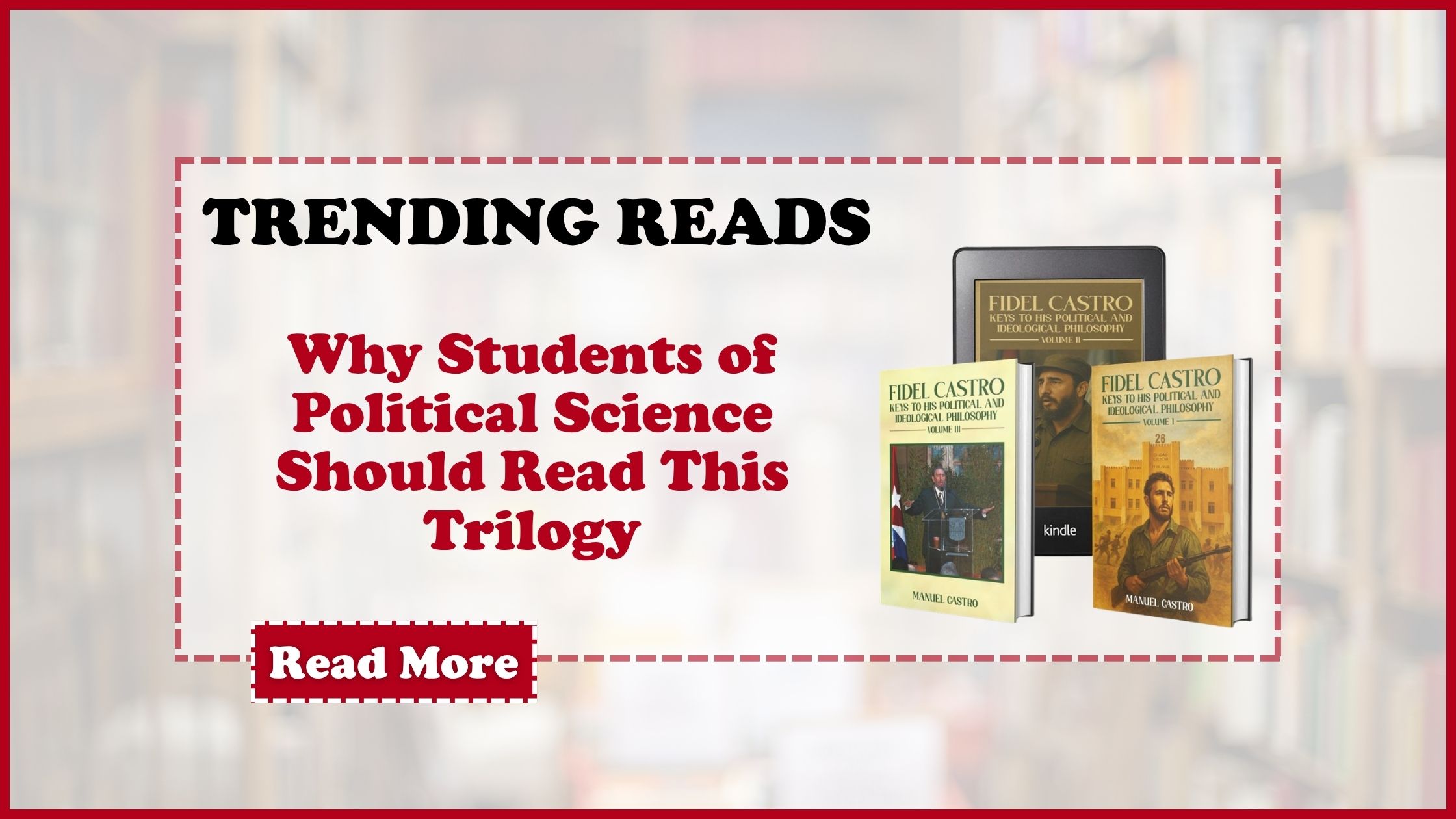
For students seeking to understand revolutionary movements, political rhetoric, ideological conflict and the mechanics of long-term leadership, Fidel Castro: Keys to His Political and Ideological Philosophy (Volume I), Fidel Castro: Keys to His Political and Ideological Philosophy (Volume II) and Fidel Castro: Keys to His Political and Ideological Philosophy (Volume III) by Manuel A. Castro offer an extraordinary intellectual resource.
This trilogy is far more than a historical account of Fidel Castro’s life. It is a comprehensive exploration of his political philosophy, leadership methods, revolutionary strategy, ideological education and international influence. Across hundreds of conceptual themes, Manuel Castro organizes and analyzes decades of Fidel’s speeches and political thought, creating a detailed framework that students of political science can study from multiple academic perspectives.
One of the most valuable aspects of the trilogy is its examination of political ideology in action. Many political science courses discuss concepts such as socialism, nationalism, anti-imperialism and revolutionary theory in abstract terms. These books show how those ideas were communicated, defended and implemented in real historical circumstances. Readers gain insight into how ideology becomes a practical force capable of shaping national identity and political behavior.
The trilogy also provides a fascinating case study in leadership. Fidel Castro maintained political influence for decades despite economic crises, foreign pressure, ideological conflict and shifting global alliances. Students interested in political leadership will find extensive material examining how he used rhetoric, symbolism, public communication and historical narrative to maintain legitimacy and mobilize support.
Another reason this trilogy is especially relevant for political science students is its focus on political communication. Fidel Castro’s speeches were not simple political statements. They were carefully constructed ideological arguments designed to educate, persuade and unify the public. Manuel Castro’s work demonstrates how language itself can become an instrument of political power.
In today’s era of media-driven politics, where messaging often determines political success, understanding Fidel’s communication strategy offers valuable lessons in mass persuasion, narrative construction and political mobilization. Students studying propaganda, political discourse or media influence will find the trilogy particularly insightful.
The books also explore broader themes central to international relations and comparative politics. Topics such as imperialism, globalization, economic dependency, national sovereignty, revolutionary movements, Cold War tensions and Third World politics appear throughout the volumes. Fidel Castro’s role in shaping political conversations beyond Cuba makes this trilogy highly relevant for students examining global political systems and ideological conflict during the twentieth and twenty-first centuries.
What makes the trilogy stand out academically is its structure. Rather than presenting ideas randomly, the books organize Fidel Castro’s thought into thematic categories, including revolution, democracy, education, ethics, culture, nationalism, poverty, human rights, media, globalization and political organization. This allows readers to approach the material systematically while tracing connections between political theory and historical events.
The trilogy also encourages critical thinking. Readers are not asked simply to admire or condemn Fidel Castro. Instead, they are invited to examine how political ideas operate within real societies and why certain leaders continue to influence political discourse long after their time in power.
For university students, researchers, educators and anyone passionate about political theory and revolutionary history, Fidel Castro: Keys to His Political and Ideological Philosophy offers a rare combination of historical documentation, ideological analysis and political insight.
Understanding politics requires more than memorizing theories from textbooks. It requires studying leaders who shaped global history through ideas, strategy and communication. Manuel Castro’s trilogy gives political science students an opportunity to explore one of the most influential and controversial political minds of the modern era in remarkable depth.