There’s a quiet habit most people carry without ever questioning it.
We define ourselves.
“I’m a failure.”
“I always mess things up.”
“This is just who I am.”
These statements feel honest. Even responsible. They give structure to chaos, a sense of identity in the aftermath of mistakes, trauma or loss.
But what if they are the very thing keeping you stuck?
What if the life you are trying to build, the version of yourself you keep imagining but never quite reach, isn’t waiting on more effort, more discipline or more time?
What if it’s waiting on you to stop defining yourself altogether?
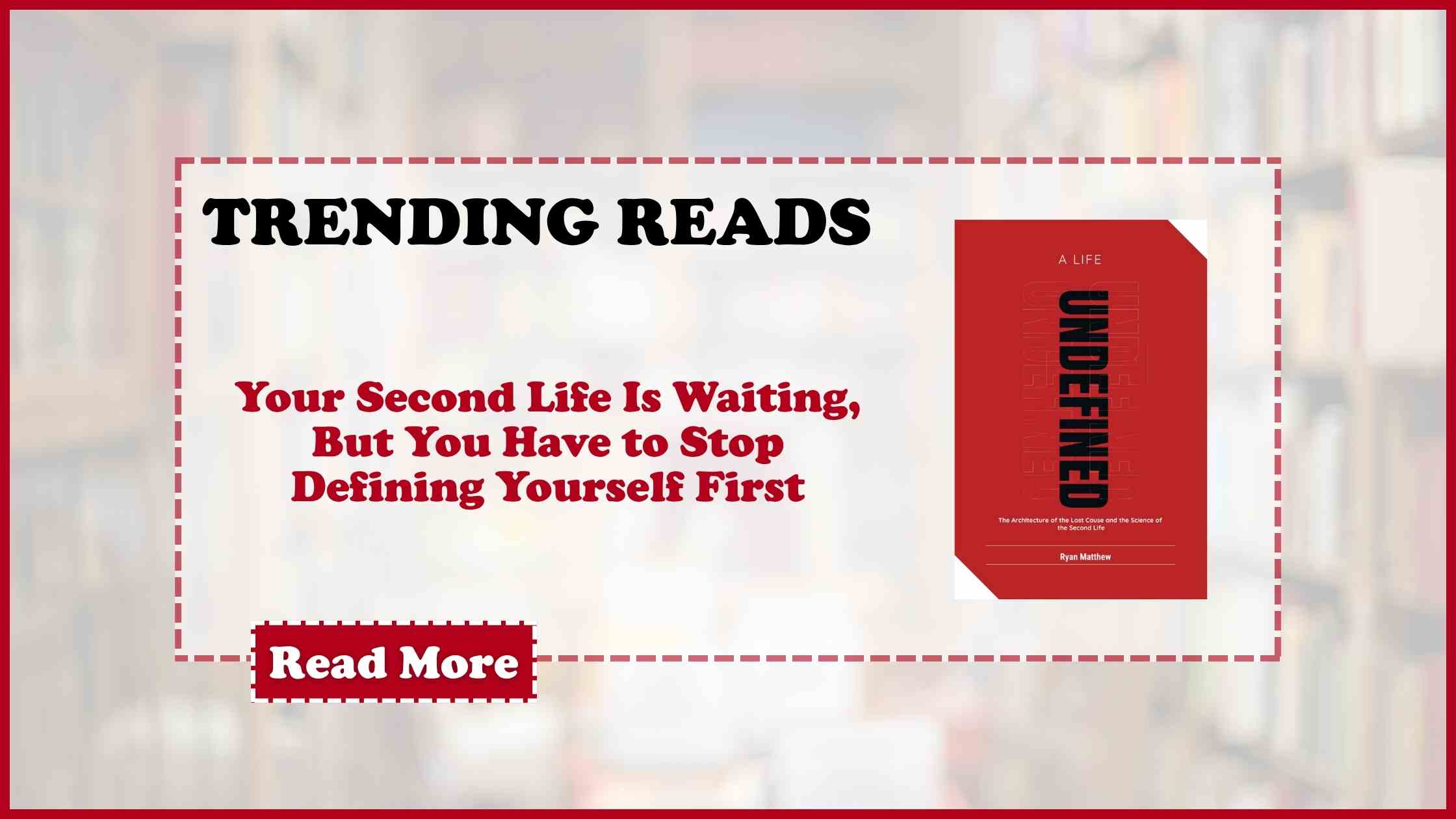
In A Life Undefined: The Architecture of the Lost Cause and the Science of the Second Life, author Ryan Matthew challenges one of the most deeply ingrained behaviors we have: the need to label who we are based on where we’ve been.
Because once you define yourself, you limit yourself.
Labels feel stable, but they are rigid. They lock you into a fixed identity shaped by past experiences, often your worst ones. And when you operate inside that identity, every decision you make starts to reinforce it.
If you believe you are broken, you will move like someone who is.
If you believe you have failed, you will expect to fail again.
Over time, the label becomes the life.
But Matthew introduces a different concept, one that feels uncomfortable at first, but deeply liberating once you understand it: the power of being “undefined.”
To be undefined is not to be lost. It’s to be unmeasured. Unrestricted. Free from the constraints of a narrative that no longer serves you.
It’s the moment you stop asking, “Who am I?” based on your past and start asking, “Who can I become?” based on your capacity.
This shift is where the second life begins.
Not as a dramatic reinvention, but as a quiet reclaiming of control.
Because the truth is, most people don’t need fixing. They need space to step outside the identity they have been carrying and see themselves differently. Not as a problem, but as a system under pressure. Not as a failure, but as someone who adapted the best they could with what they had.
And systems can change.
In A Life Undefined, Matthew offers practical tools to make that change possible. One of them is the “BREATHE” framework, a method designed to interrupt the cycle of overwhelm and help you regain control, one step at a time.
It starts with something simple: recognition.
Recognizing that the voice in your head, the one assigning labels and predicting outcomes, is not a fixed truth. It’s a pattern. And patterns can be broken.
From there, the process becomes actionable. You engage differently. You assess differently. You trust your capacity for recovery. You begin to humanize yourself rather than judge yourself. And slowly, almost imperceptibly, the identity you thought was permanent starts to loosen.
This is the architecture of the second life.
It doesn’t require perfection. It doesn’t demand that you erase your past. It simply asks that you stop using it as a blueprint for your future.
Because your second life isn’t built by becoming someone else.
It’s built by removing the limits that kept you from becoming more.
So maybe the question isn’t, “Who are you?”
Maybe the better question is, “What happens if you stop answering that and start living instead?”
Your second life is waiting.
But you have to stop defining yourself first.
Available On Amazon: https://www.amazon.com/dp/B0H1GXHFVL/