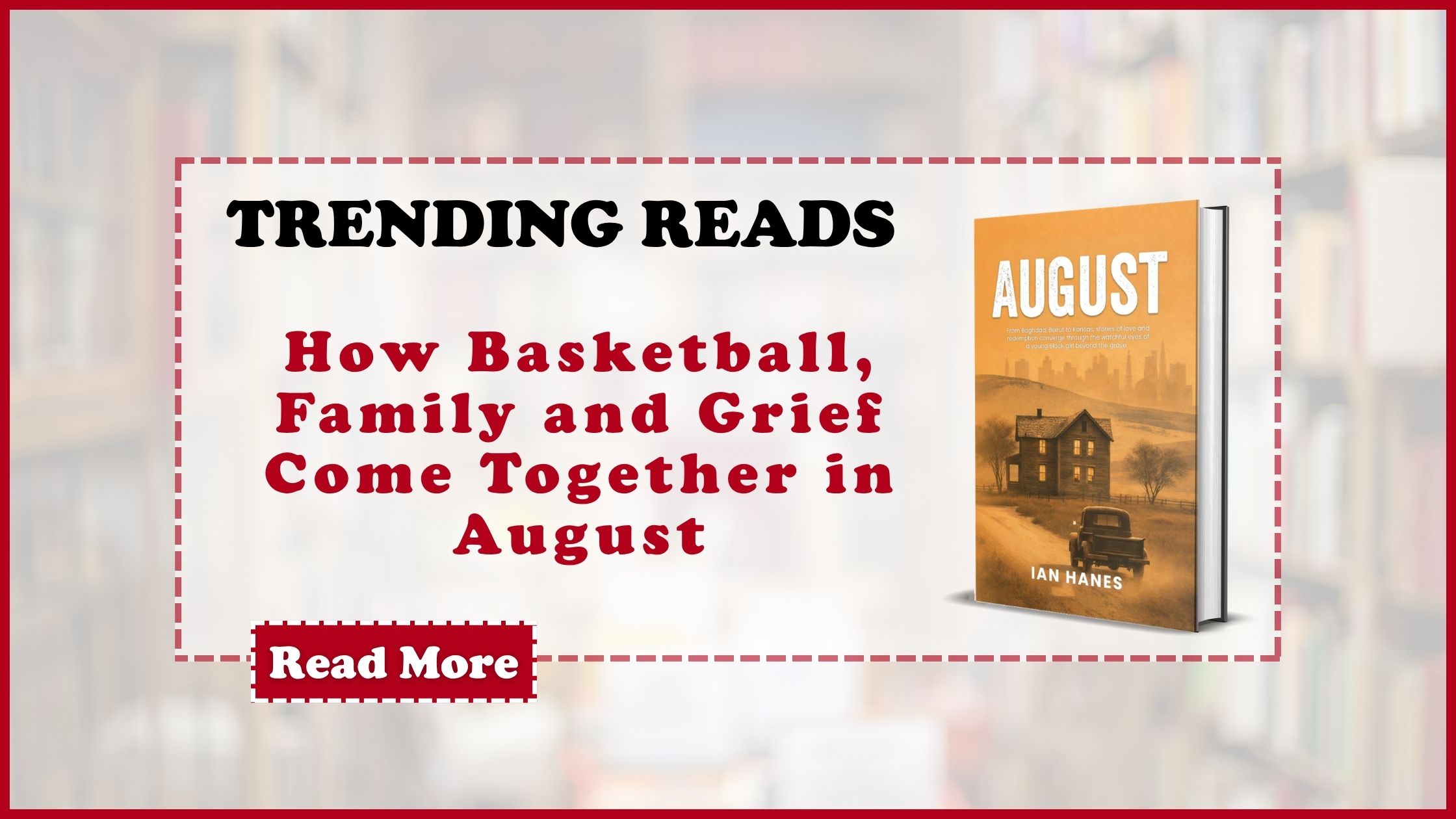
Sports can bring an entire community together, but they can also become closely tied to memories of love, loss and missed opportunities. In August: We Carry What We Bury, author Ian Hanes uses basketball as more than a backdrop. The game connects generations, strengthens family relationships and becomes inseparable from the grief carried by August Harper.
Growing up in Lebanon, Kansas, August is a naturally gifted basketball player. During the 1977 season, he becomes the star of the Lebanon Bronchos and a source of pride for the declining rural community. Each victory offers residents a reason to gather, celebrate and believe their small town still matters.
For August, however, basketball also brings him closer to Rose Carter.
Rose attends his home games and quietly supports him from the bleachers. Because she is a young Black woman falling in love with a white boy in 1970s Kansas, she understands that their relationship could attract hostility and gossip. She keeps her distance in public, even though August has become one of the most important people in her life.
After practice, the court becomes a private space where they can talk openly. August pretends he needs extra time to perfect his game, while Rose waits with a book in her hands. Away from the judgment of the town, they discuss their ambitions and imagine different futures. August hopes basketball may take him to university, while Rose dreams of becoming a civil rights lawyer.
These conversations make basketball part of their love story. The gym is not only where August develops his talent. It is also where two young people feel seen and understood.
That connection makes the championship game especially heartbreaking.
Rose rushes to the arena to watch August play, but she never reaches him. She is killed before arriving, while August leads his team to victory. On the same night he achieves his greatest sporting success, he suffers a loss that changes the course of his entire life.
After Rose’s death, basketball becomes painful rather than hopeful. College scouts offer August opportunities, but he turns them away. He gives up the future others had imagined for him and remains on his family farm. The game that once promised escape now reminds him of the person who should have shared his happiest moment.
Years later, family gives basketball a new meaning.
When August becomes a father to John, he raises him with patience, loyalty and quiet strength. He teaches John how to work the land, treat people fairly and care for those he loves. Eventually, August restores an old basketball hoop and introduces his son to the sport that once defined his youth.
John inherits his father’s natural talent. As he practises, August watches with both pride and fear. Basketball offers them a way to connect as father and son, yet it also brings August close to memories he has spent decades carrying in silence.
Through this relationship, Ian Hanes shows how families can inherit more than names, property or ability. They can also inherit unfinished stories and emotions that were never fully expressed. John may not initially understand everything basketball represents to his father, but he grows up within the shadow of August’s past.
In August: We Carry What We Bury, basketball represents hope, belonging, love and grief. It brings a community together, connects a father with his son and preserves the memory of a young relationship cut tragically short.
Ian Hanes transforms the game into a powerful emotional thread, showing how the things people love can carry both their greatest joy and their deepest sorrow.