One of the hardest truths about foster care is also one of the most important: loving a foster child does not mean replacing the family they came from.
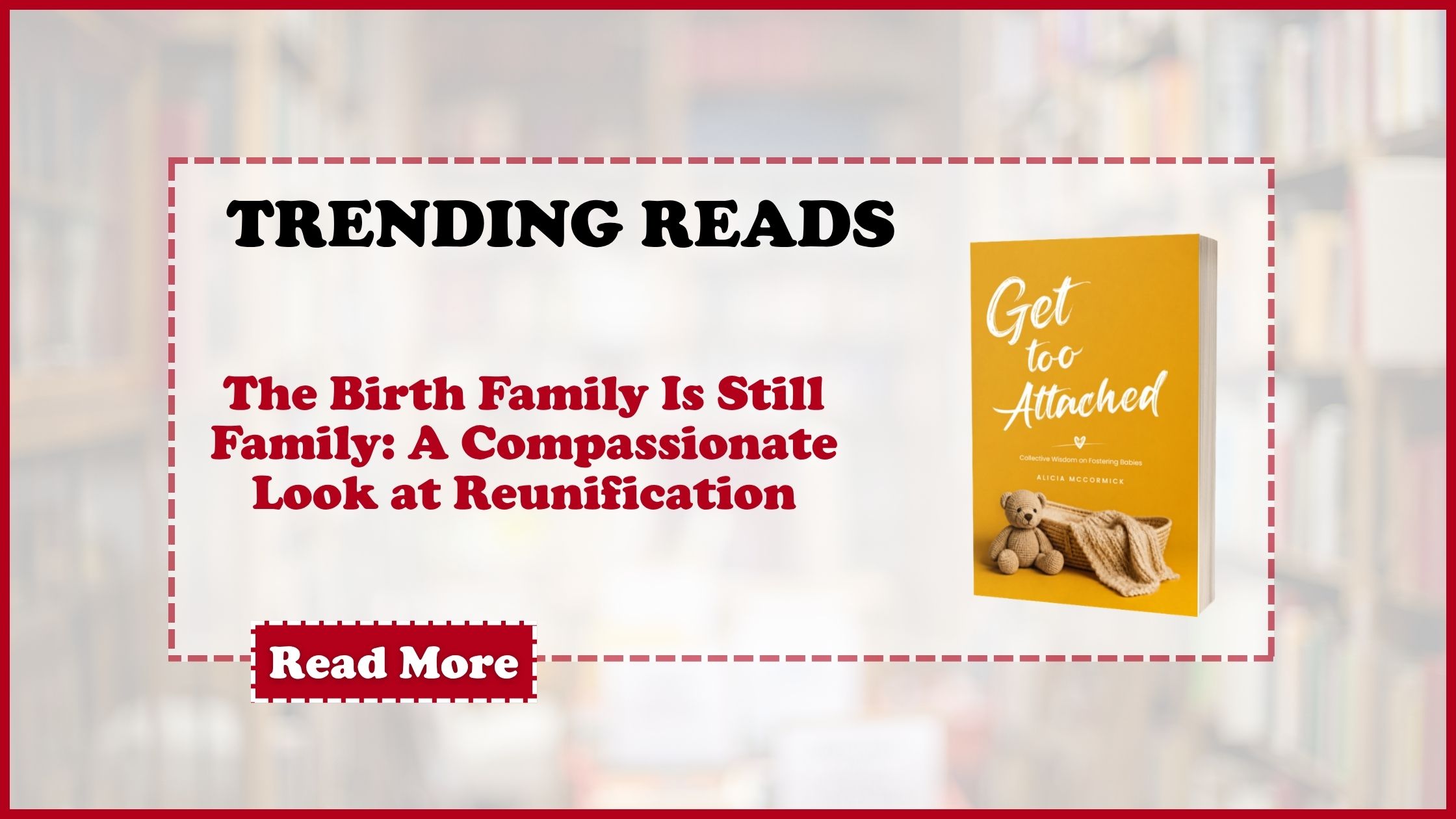
That idea runs deeply through Get Too Attached: Collective Wisdom on Fostering Babies by Alicia McCormick, PhD.
The forthcoming book brings together foster parents with very different stories, but many of them arrive at the same difficult realization. Foster care is not supposed to begin with the hope that a child stays forever. Whenever it is safe and possible, reunification with biological family remains an important part of the process.
That can be emotionally complicated when a foster parent has spent months waking up at night, attending appointments, soothing tears, advocating for services and building a powerful attachment with a baby.
But the birth family is still family.
Loving a Child Means Respecting Where They Came From
Several foster parents in Get Too Attached describe how their perspectives changed after entering the foster-care system.
Some began fostering with adoption in mind, only to realize that hoping for adoption can sometimes make it harder to genuinely support reunification. Others learned that biological parents should not automatically be treated as the enemy.
The manuscript repeatedly encourages foster parents to view birth parents through a trauma-informed lens too. In many cases, the parents involved in the foster-care system may carry painful histories of their own, including instability, addiction, neglect or unresolved trauma.
That does not erase responsibility or make unsafe situations acceptable.
It does, however, create room for compassion.
Reunification Can Be Both Joyful and Painful
One of the emotional contradictions of fostering is that a successful reunification can be good news for a child while still being heartbreaking for the foster parent.
Those two things can exist at the same time.
A foster parent can hope that a biological mother succeeds, celebrates completed visits and supports a safe return home while also grieving the loss of a baby they have loved as their own.
Get Too Attached does not pretend that this balance is easy. It shows that foster parents often live in the space between attachment and uncertainty.
That is part of what makes the book’s title so meaningful.
The goal is not to love less because the child may leave.
It is to love fully while remembering that foster care is centered on the child’s needs, not the adult’s desire for permanence.
Children Should Never Feel Forced to Choose
The book also emphasizes that foster children can continue loving their biological parents even after difficult circumstances.
That love should not be treated as betrayal.
Foster parents can create emotional safety by speaking respectfully about birth families, supporting appropriate contact, encouraging healthy relationships and making room for a child’s full story.
For babies who later grow into children asking questions about identity and belonging, that respect can matter enormously.
Get Too Attached reminds readers that fostering a baby often means welcoming more than one person into your emotional world. It means making space for a child’s history, biological relatives, social workers, professionals and sometimes a birth parent working toward change.
That complexity is not a weakness of foster care.
It is part of its reality.
Get Too Attached: Collective Wisdom on Fostering Babies by Alicia McCormick, PhD, is currently in the publishing phase and will be available to readers soon. For anyone trying to understand reunification with more empathy, the book offers a powerful reminder: supporting a child sometimes means supporting the family they came from, too.
Read the book on Amazon: https://a.co/d/021kJ9Y3