For years, the global economy was guided by a simple belief: free trade would lift all nations together. Cheaper goods would benefit consumers, competition would increase efficiency, and over time, economic openness would lead to political moderation. It sounded reasonable. It felt modern. And it was deeply flawed.
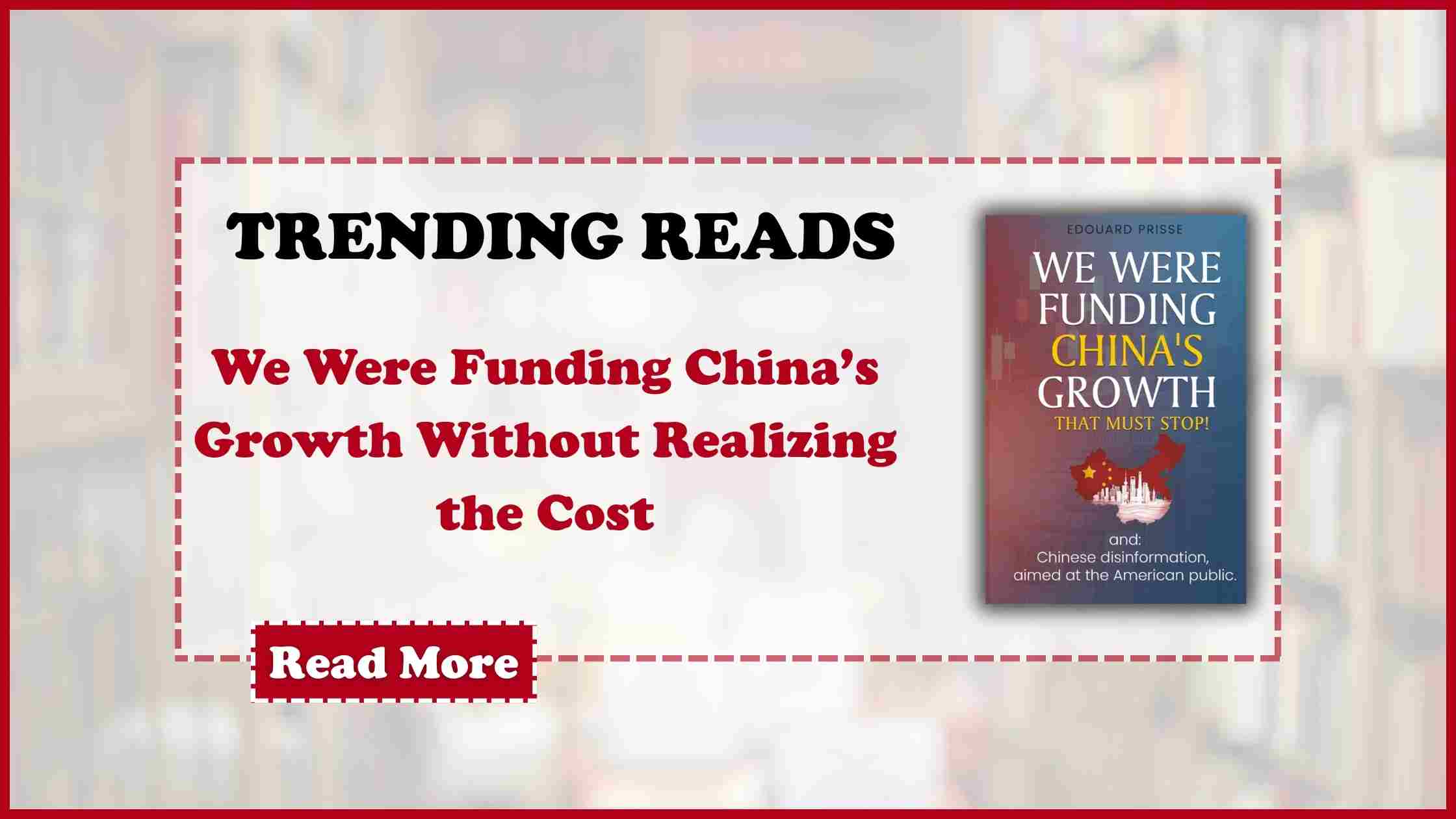
We Were Funding China’s Growth That Must Stop! by Edouard Prisse confronts this belief head on. The book does not rely on slogans or emotional language. Instead, it calmly walks the reader through a reality many policymakers and commentators have avoided. China’s rise was not accidental, inevitable, or purely the result of hard work. It was financed, year after year, by the very nations now worried about its growing power.
At the heart of the book is a simple but unsettling argument. Trade with China has never been balanced. Since China entered the global trading system in 2001, vast amounts of money have flowed in one direction. While Western countries imported cheap goods, China accumulated cash. That cash did not remain dormant. It became factories, infrastructure, technology, influence, and leverage.
Prisse challenges the comforting idea that economic size alone defines power. Gross domestic product figures may still favor the United States and Europe, but liquid financial reserves tell a different story. According to the book, power in today’s world comes from accumulated money that can be deployed quickly and strategically. By that measure, China’s position has strengthened far faster than most democracies were prepared for.
What makes the book stand out is its refusal to place blame where it does not belong. China, Prisse argues, acted rationally within a system that allowed it to do so. If trade partners make poor decisions, it is not irrational to benefit from them. The real responsibility lies with Western leaders, advisers, and institutions that failed to understand the consequences of opening free trade with a country operating under a completely different economic and political model.
The book is particularly critical of the assumption that trade would change China. Instead of becoming more open and market-driven, China maintained strict state control, suppressed labor costs, protected domestic industries, and selectively followed international rules. Meanwhile, Western economies outsourced production, weakened industrial capacity, and grew dependent on long supply chains.
Prisse does not argue against trade itself. He argues against imbalance without correction. His proposed solution, which he calls Equal Trade, does not shut China out of global markets. It sets limits. Trade should continue, but exports and imports should be measured and kept roughly equal in value. The more equal the trade, the healthier the relationship.
This idea may sound simple, but the book makes clear that implementing it would require political courage, patience, and a willingness to endure short-term disruption for long-term stability. It would also require leadership, particularly from the United States, which remains the most important market for Chinese exports.
What makes this book compelling is not alarmism, but clarity. It explains how we arrived at the current situation, why common explanations fall short, and why ignoring the issue only increases future risk. By the final chapters, the reader is left with an uncomfortable question. If we now understand the mistake, why are we still repeating it?
We Were Funding China’s Growth That Must Stop! is not a book about fear. It is a book about responsibility. It asks readers to look beyond low prices and short-term gains and consider what kind of economic future they are willing to accept. Once that question is asked honestly, it becomes difficult to look at global trade the same way again.
Here is a link to purchase: www.amazon.com/dp/1967963053.
We Were Funding China’s Growth That Must Stop! by Edouard Prisse is a sharp, well-researched examination of how decades of misguided free trade with China have fueled the rise of America’s greatest rival. Drawing on the economic insights of John Maynard Keynes, Prisse explains how the 2001 decision to welcome China into the global trade system created a one-sided relationship that drained Western industries while empowering Beijing’s authoritarian regime. The book not only exposes the dangers of this ongoing imbalance, such as job losses, weakened manufacturing, and growing geopolitical risks, but also offers a clear solution: shifting from “free trade” to “Equal Trade,” a value-balanced system that ensures reciprocity and protects democracy. Both a warning and a roadmap, this book is essential reading for policymakers, business leaders, economists, and citizens who care about safeguarding the future of free societies.